Work / URA Dream Lab
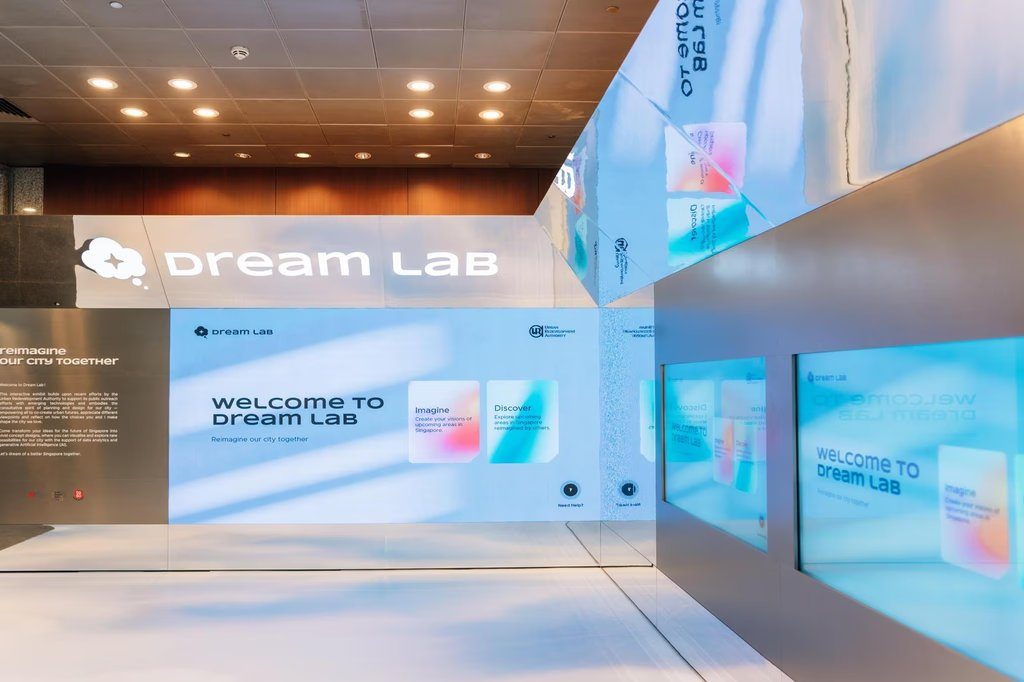
URA Dream Lab · AI-powered exhibition 2026 SG Mark winnerMaster plan consultation usually happens to the public. For URA's Draft Master Plan 2025, I pitched, won, and delivered an exhibition that flipped it: the public used generative AI to imagine their own city and watched it appear. Twenty-seven days from pitch to launch, leading a team of eleven, with outputs cited at the National Day Rally and a 2026 Singapore Good Design Award (SG Mark) win.
At a glance
About the project
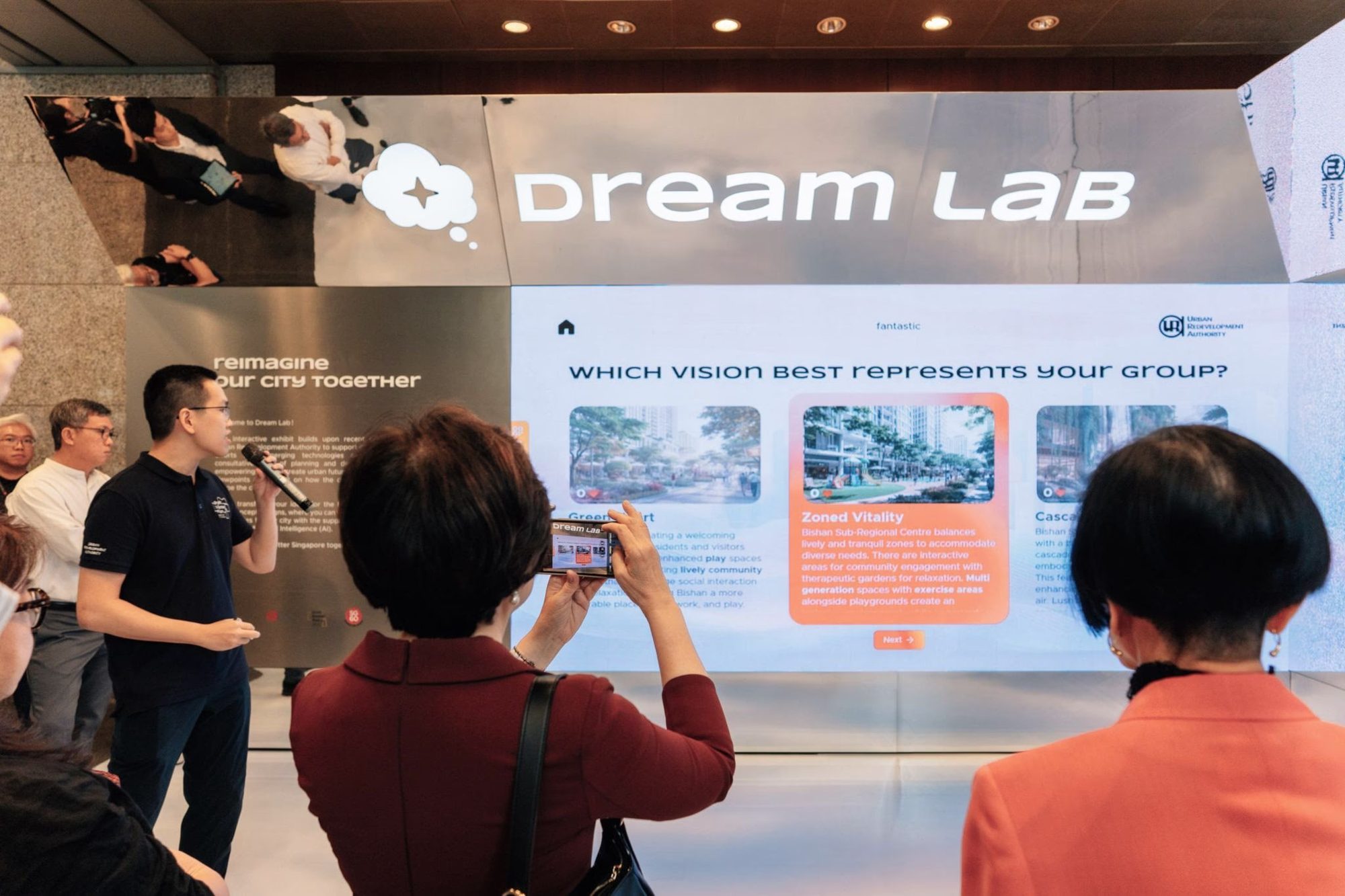
Master plan exhibitions traditionally tell the public what is coming. But a future you are only shown is a future that happens to you. The point of Dream Lab was to change that feeling: to make people feel part of the master plan, invested in where the country is going because they had a hand in imagining it. Visitors described the Singapore they wanted, and generative AI rendered their ideas in front of them, turning a consultation exercise into something people queued to take part in.
Investment also meant being honest about limits. A master plan is a web of trade-offs: ask for more green space and there is less room for housing, and every wish has something behind it that has to give to keep the city in balance. So we built the trade-offs into the experience. When a visitor reached for one thing, they saw what it cost elsewhere, and left understanding that a liveable city is a balance to be kept, not a wish-list to be filled.
No government agency in Singapore had run a fully AI-powered public exhibition before. There was no precedent for what could go wrong, which meant every risk had to be reasoned from first principles, on a 27-day clock.
Reach for more of one thing and the render showed what it cost elsewhere: more green space, less housing. The trade-off, made visible.
The challenge
Generative AI in a private demo is forgiving. Generative AI rendering a citizen's idea live, in a government exhibition, with media present, is not. The hard problem was not generating images. It was building a pipeline whose every possible output someone was willing to stand behind.
The process
I pitched the AI-powered concept against conventional exhibition formats and won on a simple argument: participation produces more honest input than presentation, and the Draft Master Plan consultation needed honest input. Winning also meant owning the timeline that came with it.
I directed the generative pipeline around constraint, not capability: a controlled visual language so outputs felt like one exhibition rather than a model's defaults, prompt structures that kept renders grounded in real Singapore contexts, and moderation layers for anything a visitor could input. The guardrails were the product.
Eleven people across design, engineering, content, and fabrication, working in parallel because sequence was a luxury the timeline did not allow. My job was less designing screens than sequencing decisions: knowing which calls had to be made on which day for everything downstream to land.
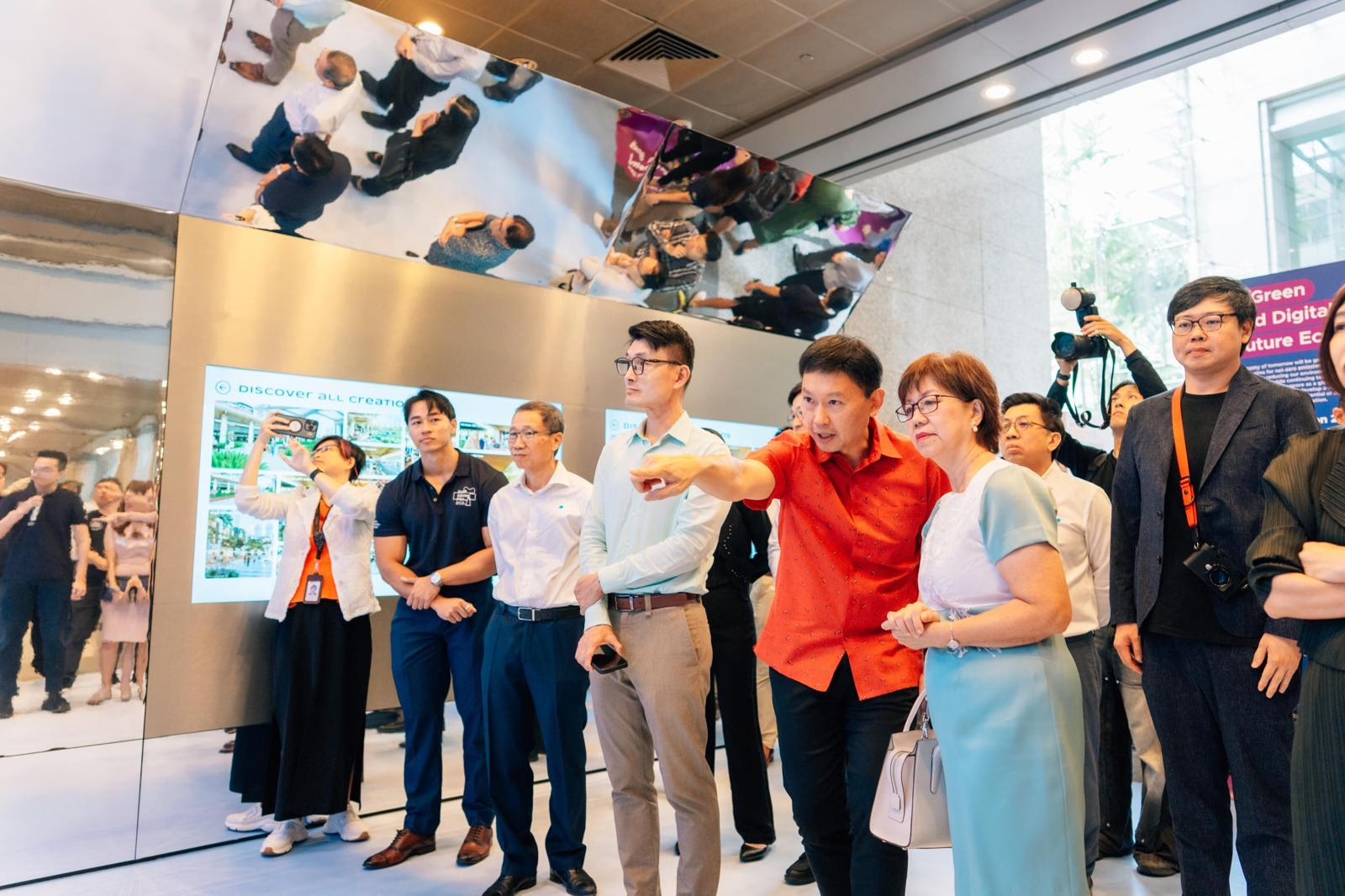
Dream Lab opened on time as part of the Draft Master Plan 2025 exhibition. The clearest signal of impact came later: AI-generated outputs from the exhibition contributed to the Prime Minister's National Day Rally speech, citizen imagination, rendered through our pipeline, surfacing at the country's most-watched address. In 2026, the work was recognised with a Singapore Good Design Award (SG Mark).
The contested moment
Institutions are built to control outputs. Generative AI is built to surprise. The case I made was that the two are reconcilable if you move the control upstream: constrain the inputs, the visual language, and the failure modes, and you can let the outputs breathe. That argument, evidenced and rehearsed, is what made the exhibition possible at all.
Results
From the client
“From the early design stages to launch, the team demonstrated exceptional professionalism and dedication. They responded promptly at every step, showing a real willingness to iterate through multiple rounds of changes to get every detail just right. It's rare to find a partner so reliable, responsive, and solution-oriented.”
In the media
Other cases